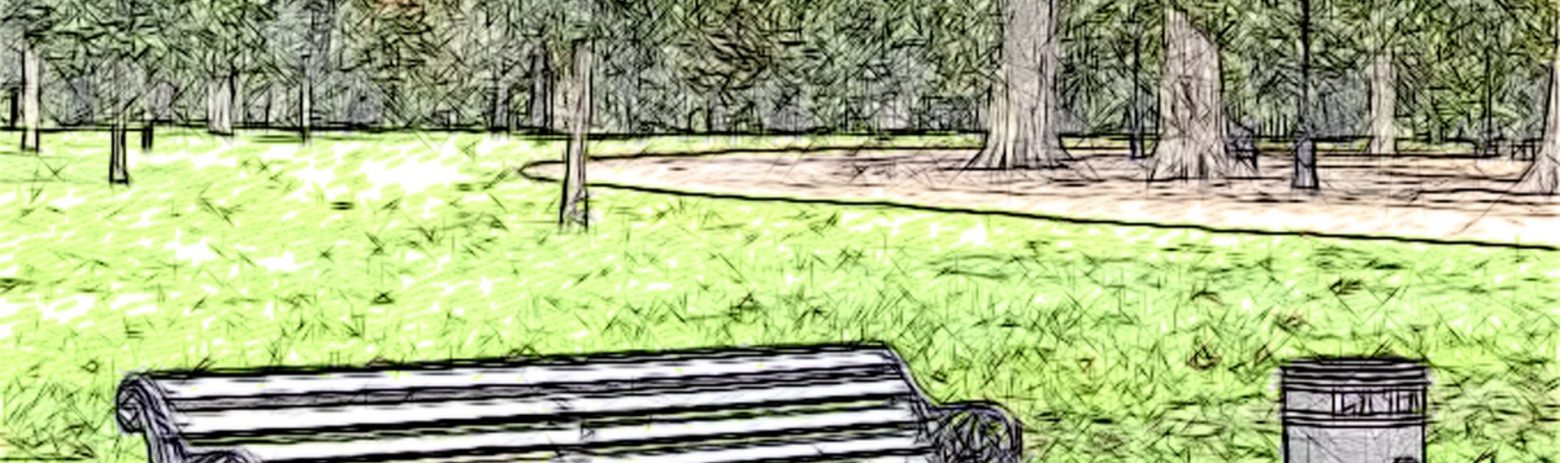
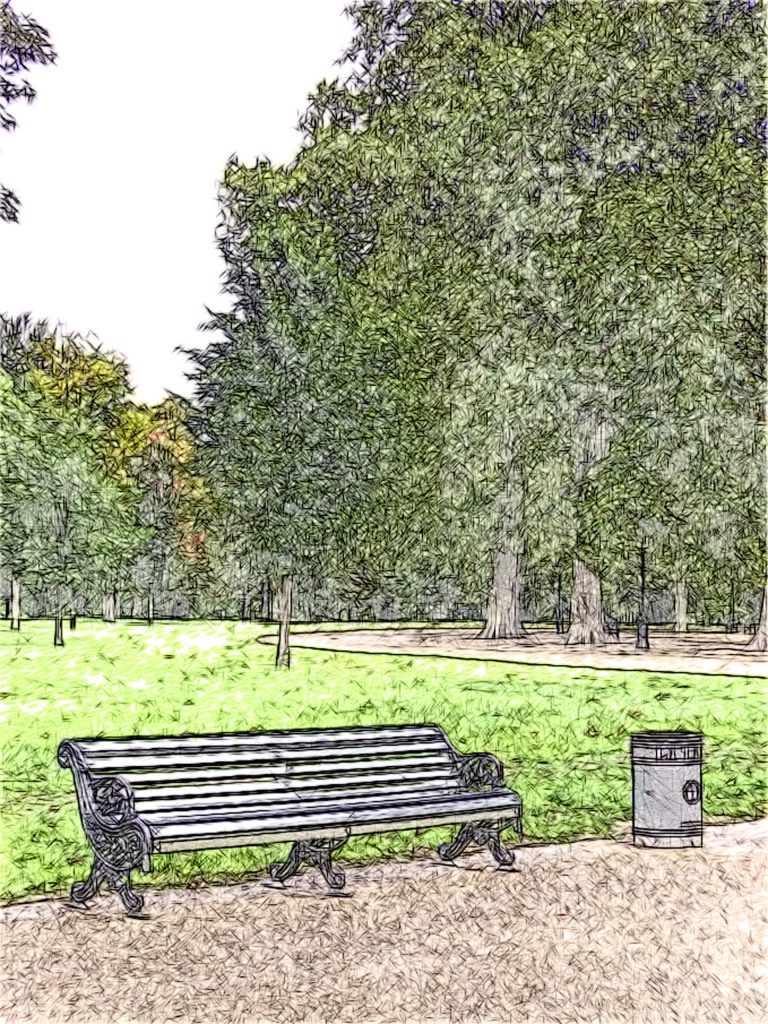
Today I took my daily walk through the streets of the city and through a park, and the birds were singing happily everywhere. I heard many types of birdsong and saw several kinds of birds, and some did not show themselves, but they were there.
I also heard a noise in the undergrowth beside the path. I looked, and noticed that the grass was being moved by some small animal. A pigeon flapped noisily above my head, twice, and both times it perched on the top of a lamppost, watching me while I watched it. I heard the engine of a vehicle coming from behind, and without turning to see it I felt how it was approaching me until it passed by my side.
I heard the sound of the leaves of the trees gently moved by the wind, while I felt it on my face, fresh and dry. I also heard the footsteps of a dog and its master approaching me from behind. And I could continue in this way, counting the sounds that I perceived during my walk today and during the walks of every day. But no. I only intend to highlight one of the sensations that I perceive when I am in the street, in a park, in the subway, in a train, in an aeroplane, in a supermarket: I hear many different things. Hearing is a very valuable sense in the life of human beings.
Nowadays, there are many people who walk around wearing headphones or talking on the mobile phone almost continuously. They move everywhere without being aware of the sounds that are present in the place where they are. Hearing the sounds that surround us allows us, among other things, to know where we are. This is well known by blind people, who need to be guided by their ears and other senses much more than do people who can see.
Observe, for a moment, people who are listening to something through a device – headphones, for example – and observe the way they move. As they do not perceive the sounds that surround them, they move as if they were deaf, without adjusting their movements so as to avoid sources of sound which may be very close to them. Thus they cannot know when a person, dog or vehicle is approaching, nor whether the birds are singing much more today and are happier than they were a few days ago.
If, in addition to hearing, we are able to perceive smells and colours and many other sensations, if we use all the senses that nature has given us, we can react to any eventuality that occurs. We can also feel part of the real world in which we find ourselves. Remaining with our ears covered, and full of sounds that are unconnected with the place where we are physically, is something that departs from the natural function of the ear: detecting what surrounds us. Of course, the ear also serves to listen to music, at other times, and not while we are moving in places where there are movements of vehicles and other people.
There is something alienating about hearing something different from what is close to us. If this happens when we are quiet and immobile, normally nothing happens − or perhaps something does happen. There are sound messages that should be heard, such as that indicating the train’s last stop, or when you have to evacuate a building.
Those who have their ears covered, listening to something through their headphones and moving at the same time (on foot, by bicycle, motorcycle, car, or skiing, skating, etc., because there are people for everything), will move in an unexpected way for people who are close. You never know what a runner with headphones will do, or someone wearing headphones while riding a bike …
A few years ago, paediatricians from a U.S. hospital published a short article1 to draw attention to the danger of using mobile devices with headphones in the street. They had the sad experience of attending to a teenager who was hit by a train and died without their being able to do anything, given the serious injuries suffered in the accident. The boy was listening to something with headphones, and did not notice that the train was approaching, nor the train’s hooter, nor the light or sound signals of the level crossing, nor did he realize that people were shouting at him to warn him of the danger. He was absorbed in watching and listening to his device and did not notice anything outside his headphones. He was a healthy boy, with perfect hearing and eyesight.
It has been proved that the use of headphones increases the risk of accidents in pedestrians, due to the masking of sounds and to the distractions involved2,3. And it seems that younger people tend to use these devices at the highest volume4, and also that users increase the volume during physical exercise and outside, in general5.
The cases of accidents with more or less fatal consequences, due to distractions caused by the use of devices with headphones, are avoidable. This requires a change in behaviour, based on awareness of the risk involved. And, incidentally, the correction of this behaviour, which is so alien to the natural use of the human ear, would enable people to move around in public places in a more civilised way, and with more consideration for others.
Dr. Ana M. Cerro. PhD and Immunologist.
References
1. Jamshidi R, Jamshidi MA. Headphones and handhelds as contributors to preventable trauma. Wilderness Environ Med. 2013;24(2):179–80.
2. Lichenstein R, Smith DC, Ambrose JL, Moody LA. Headphone use and pedestrian injury and death in the United States: 2004-2011. Inj Prev. 2012;18(5):287–90.
3. Stavrinos D, Byington KW, Schwebel DC. Effect of cell phone distraction on pediatric pedestrian injury risk. Pediatrics. 2009;123(2):e179-185.
4. Fligor BJ, Cox LC. Output levels of commercially available portable compact disc players and the potential risk to hearing. Ear Hear. 2004;25(6):513–27.
5. Hodgetts W, Szarko R, Rieger J. What is the influence of background noise and exercise on the listening levels of iPod users? Int J Audiol. 2009;48(12):825–32.